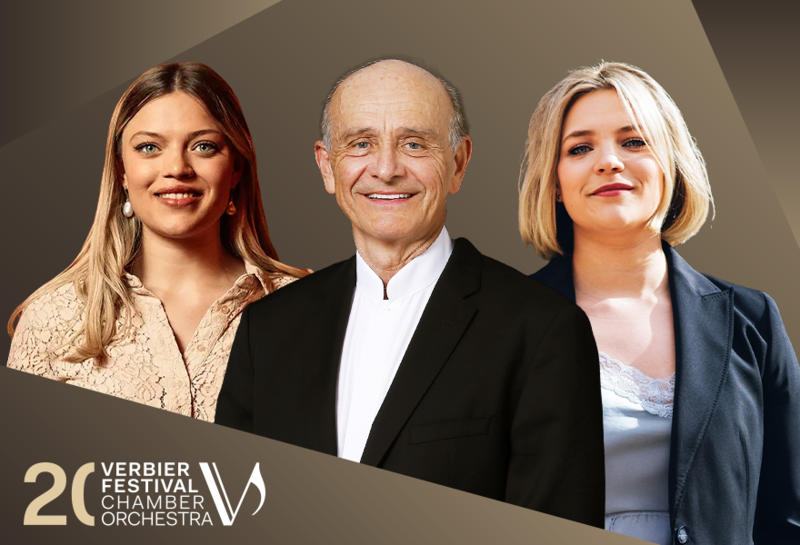
ANNA EL-KHASHEM / GIOVANNI SALA / KONSTANTIN KRIMMEL

The outstanding team of soloists from Così fan tutte presents a vocal chamber music program highlighting some of the most beautiful romantic works in the repertoire. An ideal opportunity to rediscover — or discover — the finest talents of the young generation of singers.
Program
ROBERT SCHUMANN (1810-1856)
Spanische Liebeslieder Op. 138
(J. Wallroth, R. Wallroth, Sala, Krimmel, Dowdle, Baillieu)
CLARA SCHUMANN (1819–1896)
« Die stille Lotosblume » Op. 13 No. 6
(El-Khashem, Dowdle)
ROBERT SCHUMANN (1810-1856)
« Du bist wie eine Blume » Op. 25 No. 24
(El-Khashem, Dowdle)
CLARA SCHUMANN (1819–1896)
« Er ist gekommen in Sturm und Regen » Op. 12 No. 1
« Liebst du um Schönheit » Op. 12 No. 2
(J. Wallroth, Baillieu)
JEAN SIBELIUS (1865–1957)
« Var det en dröm? » Op. 37 No. 4
(J. Wallroth, Baillieu)
Interval
FRANZ SCHUBERT (1797–1828)
Prometheus D. 674
(Krimmel, Baillieu)
ROBERT SCHUMANN (1810-1856)
“Widmung” from Myrthen Op. 25 No. 1
“Stille Tränen” from Kerner Lieder Op. 35 No. 10
(Sala, Dowdle)
VAUGHAN WILLIAMS (1872–1958)
“Silent Noon”,
(Krimmel, Baillieu)
JOHANNES BRAHMS
Zigeunerlieder Op. 103
(El-Kashem, R. Wallroth, Sala, Krimmel, Baillieu, Dowdle)
Artist(s)
- Anna El-Khashem soprano
- Johanna Wallroth soprano
- Marie-Juliette Ghazarian mezzo-soprano
- Giovanni Sala tenor
- Konstantin Krimmel baritone
- James Baillieu piano
- Caroline Dowdle piano
Anna El-Khashem and Peter Mattei perform “Là ci darem la mano” from Mozart’s Don Giovanni
Schumann’s Spanische Lieder and Brahms’ Zigeunerlieder are works that evoke a more or less fantastical elsewhere. While the former uses exoticism more as a flavouring than as a concrete inspiration, the latter composes by cultivating a distinctly bohemian musical and rhythmic soil that has followed him since he wrote his famous Hungarian Dances.
For Schubert’s Gesänge für vier Singstimmen, with their typically Viennese charm, we can count on the expertise of Johanna Wallroth, who cut her teeth at the Vienna State Opera before taking to stages around the world.
As for Dvořák’s Moravian Duets, they take us back to the time when he accompanied amateur musicians in Bohemia on the piano. Gradually, he builds increasingly complex accompaniments around these delightful folk melodies, while the vocal boldness reflects the composer’s growing expertise. Between classical and folk music, a unique moment with one of the most intimate ensembles in opera.